
.jpg)
If you’ve ever shopped for children’s swimwear, you’ve probably come across the term UPF50+.
It sounds reassuring, but what does it actually mean? Does UPF50+ mean a child is completely protected from the sun? And is a higher UPF always better?
Here’s a simple guide to help parents understand what UPF means, what to look for when choosing sun-protective clothing, and why the details of the garment itself matter too.
What Does UPF Mean?
UPF stands for Ultraviolet Protection Factor.
Unlike SPF, which is commonly used to describe the protection provided by sunscreen, UPF measures how much ultraviolet (UV) radiation can pass through a fabric.
For example, a fabric rated UPF 50 allows approximately 1/50th of UV radiation to pass through it — meaning it blocks around 98% of UV radiation under the test conditions used for the rating.
UPF50+ indicates very high protection, with the fabric allowing less than 2% of UV radiation through under the relevant testing conditions.
This is why UPF is a useful feature to look out for when choosing children's swimwear, especially for families who spend extended periods outdoors.

UPF50+ Doesn't Mean "No Sun Protection Needed"
This is an important distinction.
UPF-rated clothing helps protect the areas covered by the garment, but it does not cover every part of the body.
A child wearing a long-sleeved UPF50+ rash guard still has exposed areas such as the face, hands and potentially the legs. These areas may still require other forms of sun protection, depending on the situation.
Think of UPF clothing as one part of a bigger sun-protection approach, rather than a replacement for everything else.
For outdoor activities, parents can also consider shade, hats, sunglasses, sunscreen on exposed skin, and avoiding prolonged exposure when the sun is strongest.
Why Is UPF50+ Useful for Children's Swimwear?
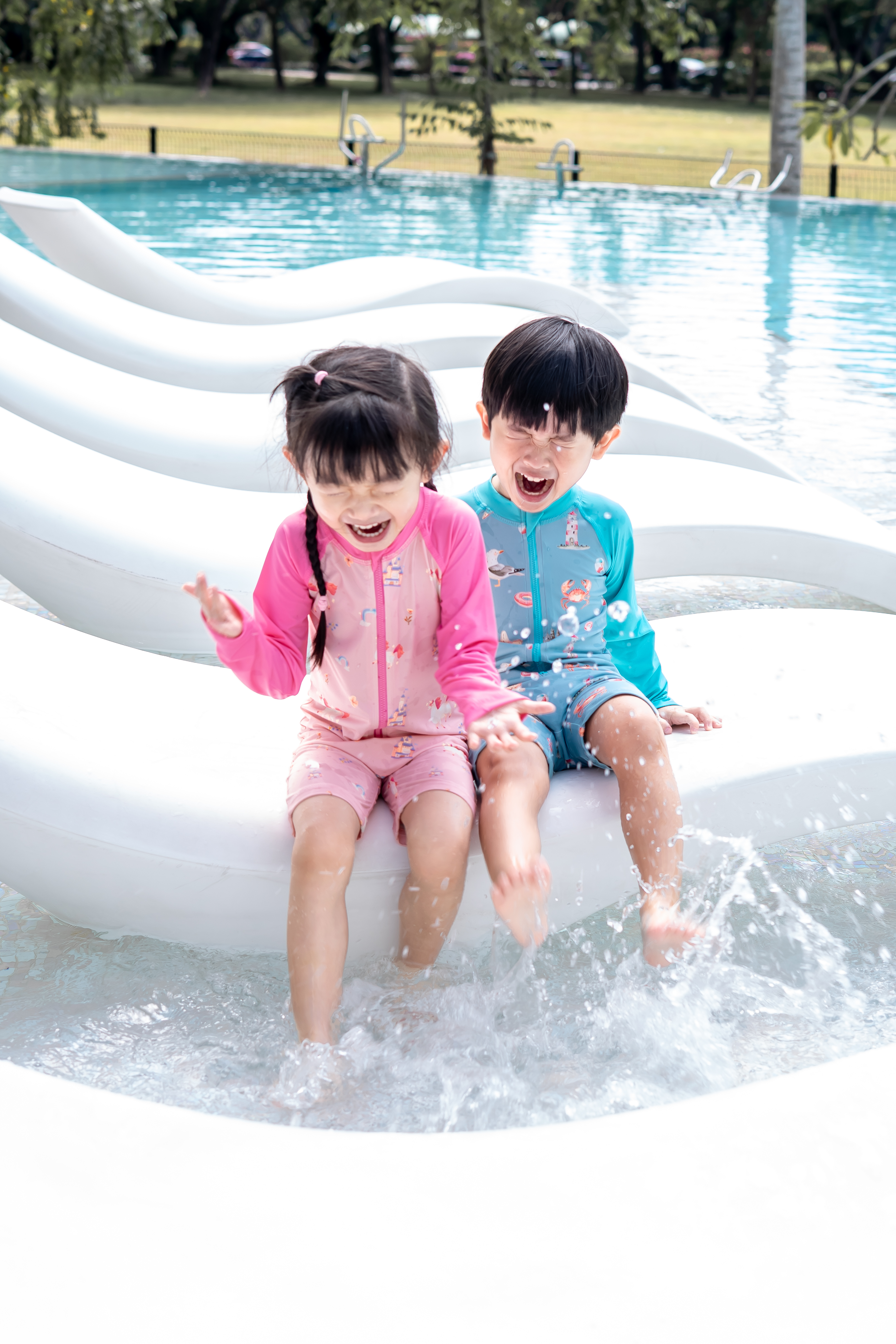
Children often spend a lot of time outdoors when they're swimming, playing at the beach or enjoying water activities.
And unlike adults, they aren't necessarily going to remember to stay in the shade or reapply sunscreen themselves!
This is where sun-protective clothing can be particularly practical.
A UPF-rated swimwear piece provides a layer of protection over the skin covered by the garment, without requiring parents to repeatedly apply sunscreen to those covered areas.
For little ones who spend hours playing in and around the water, having more skin covered by swimwear can also mean less exposed skin to worry about.
What Else Should Parents Look For in UPF Swimwear?
1. Coverage
Think beyond the UPF number.
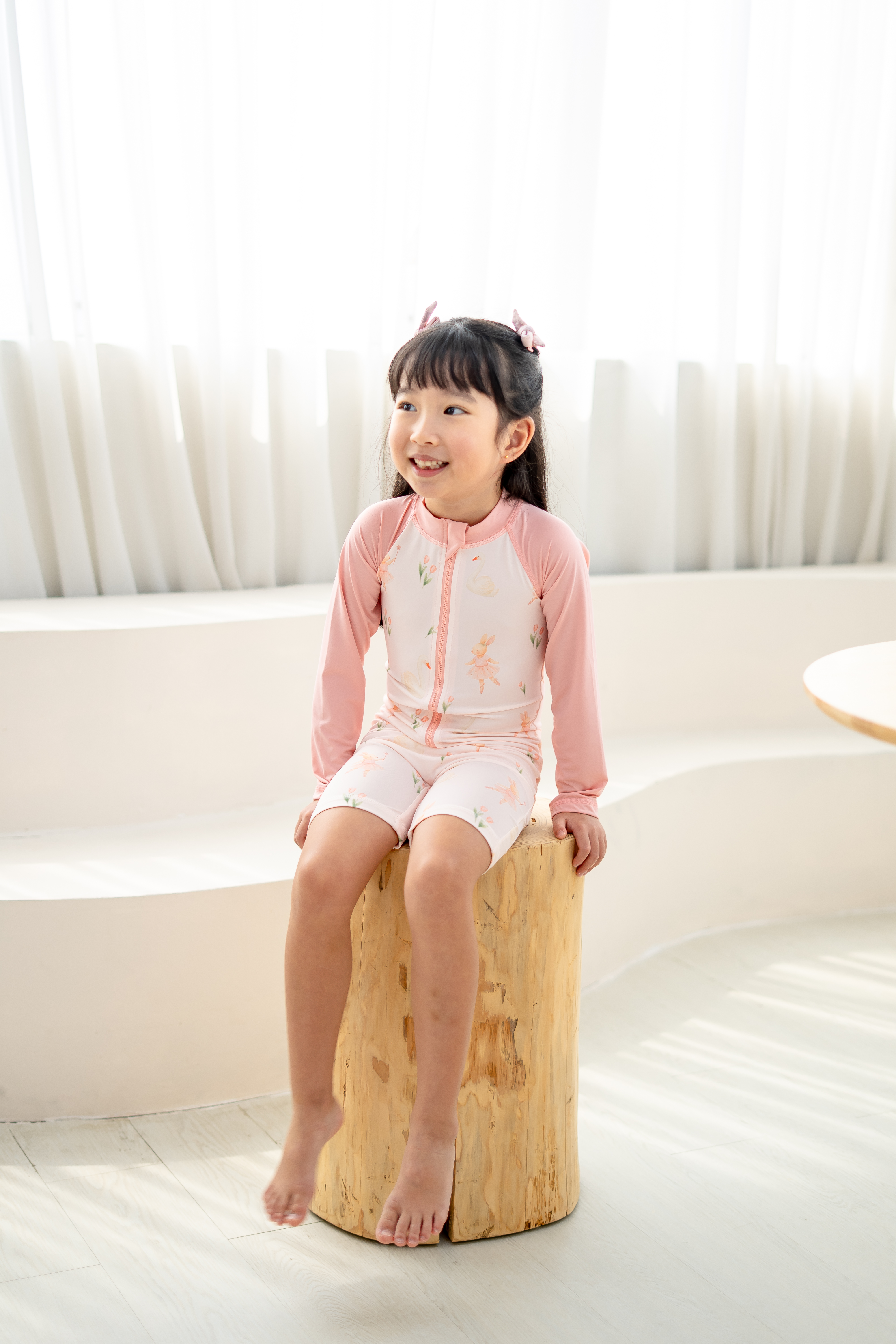
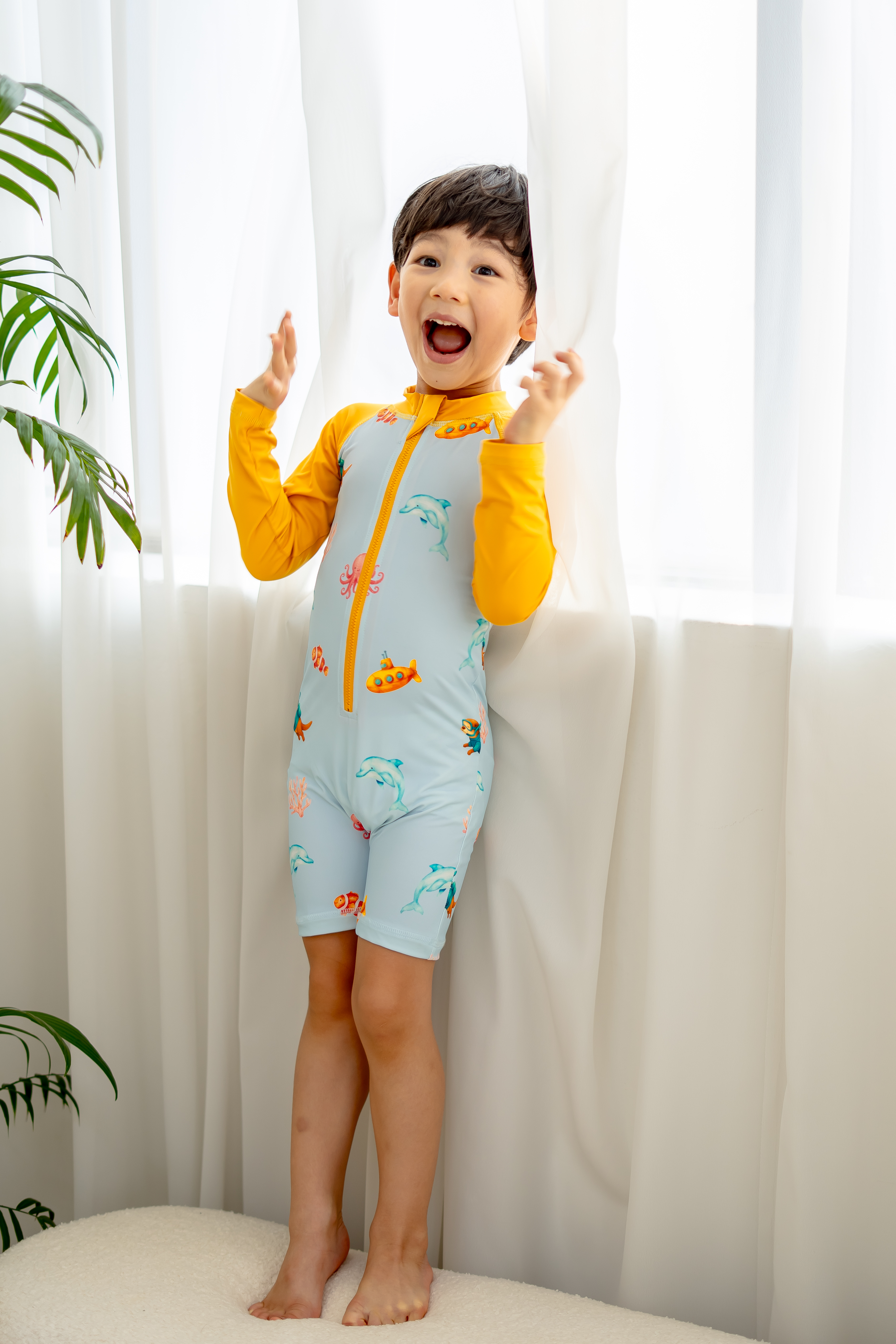
A short-sleeved swimsuit and a long-sleeved rash guard may both have a high UPF rating, but they don't provide the same amount of physical coverage.
For children who spend a lot of time outdoors, you may prefer styles that cover more of the arms, shoulders, thighs or legs.
Coverage is ultimately a practical consideration: how much skin does the garment actually cover?
2. Fabric and Construction
The way a fabric is made can affect its ability to provide UV protection.
Factors such as fabric density, thickness, colour, construction and whether the fabric becomes stretched can influence how much UV radiation passes through.
This is another reason why looking only at a fibre name or a number on a product listing doesn't always tell you the whole story.
The finished garment matters.
3. Fit Matters Too
A garment should provide comfortable coverage without restricting movement.
Swimwear that is excessively stretched, for example, may behave differently from the same fabric when it is relaxed.
At the same time, children need to be able to swim, run, climb, play and move freely.
For us, the goal isn't simply "maximum coverage at all costs."
It's finding a balance between protection, comfort, movement and a fit that children can happily wear.
4. Practical Details Matter
The little details can make a difference too.
When you're dealing with children's swimwear, think about things such as:
- Is it easy to put on and take off?
- Is the neckline comfortable?
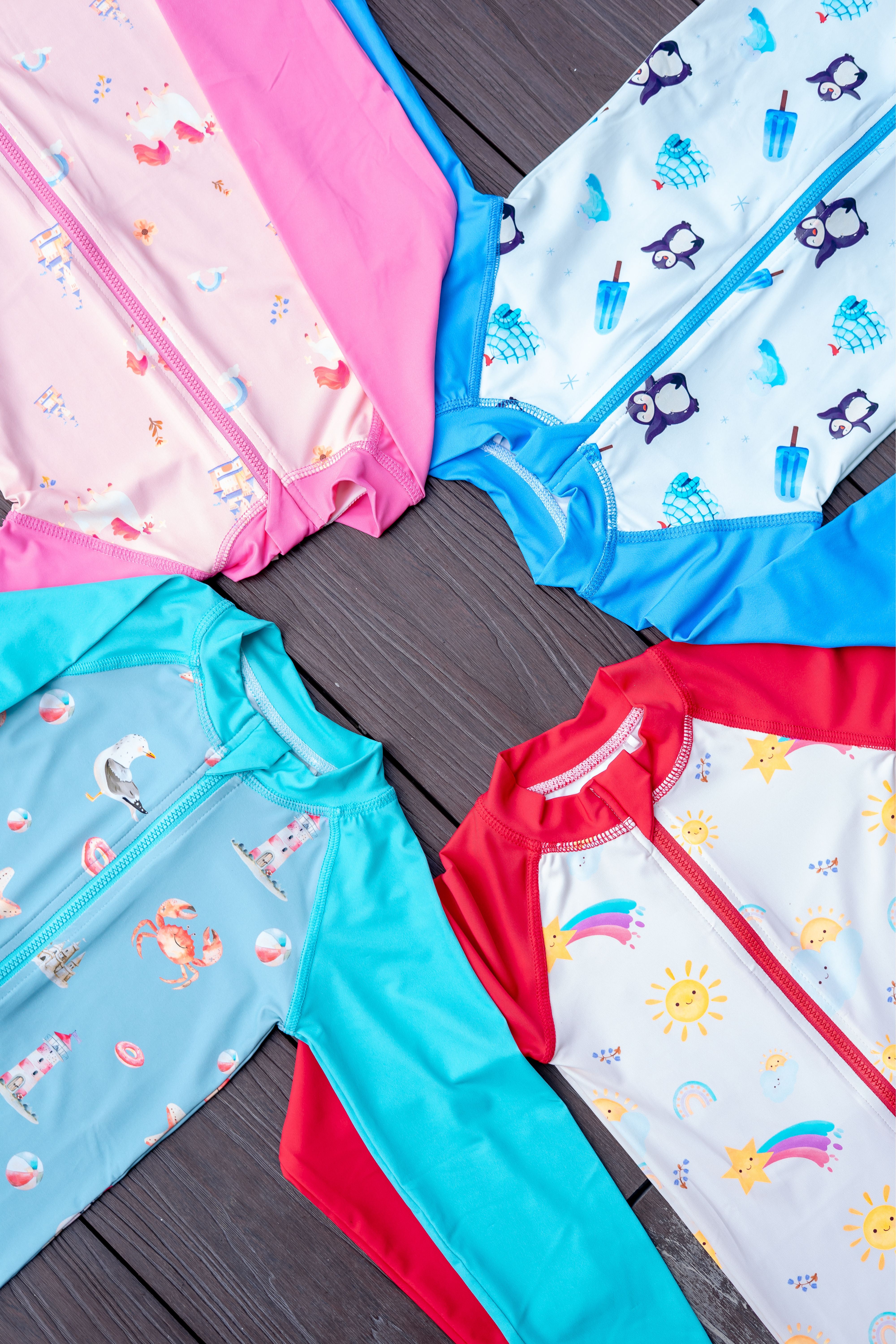
- Are the zippers easy to use?
- Does the garment stay in place when children are moving around?
- Does it provide the coverage you actually want?
- Can your child move comfortably in it?
- Will they be happy wearing it for an extended period?
These may not sound like "sun protection" questions, but they are part of choosing swimwear that works in real life.
A Quick UPF50+ Cheat Sheet
If you're shopping for children's swimwear, here's a simple checklist:
UPF50+
→ Very high UV protection rating for the fabric/garment
Coverage
→ Consider how much skin the design actually covers
Fabric & construction
→ Look beyond the fibre name and consider how the finished fabric is made
Fit
→ Comfortable coverage without excessive stretching or restricting movement
Practicality
→ Easy to put on, take off and wear for extended periods
Other sun protection
→ Don't forget exposed skin, shade, hats and other appropriate sun-protection measures
So, Is UPF50+ Worth Looking For?
For families who spend a lot of time outdoors, UPF50+ can be a useful feature to look for in children's swimwear and sun-protective clothing.
But we believe the best approach is to look at the whole garment rather than one number.
Because when you're choosing something for your child, you're not just choosing a UPF rating.
You're choosing something they will actually have to wear, move, swim, play and spend hours in.
And that's why we pay attention to the details.
At Coastberry, our UPF50+ swimwear is designed with coverage and comfort in mind, with options offering extended arm and thigh coverage. We also look closely at the smaller components used in our swimwear — including durable YKK zippers — because we believe these details matter when something is going to be worn, washed and used again and again.