
.jpg)
Have you ever looked at a children's clothing product description and thought:
"Okay… but what does all of that actually mean?" 😅
GSM. Stretch. Sheerness. Breathability. Waterproofing.
These are terms you may come across when shopping for children's clothing, but they're not always explained in a way that's easy for parents to understand.
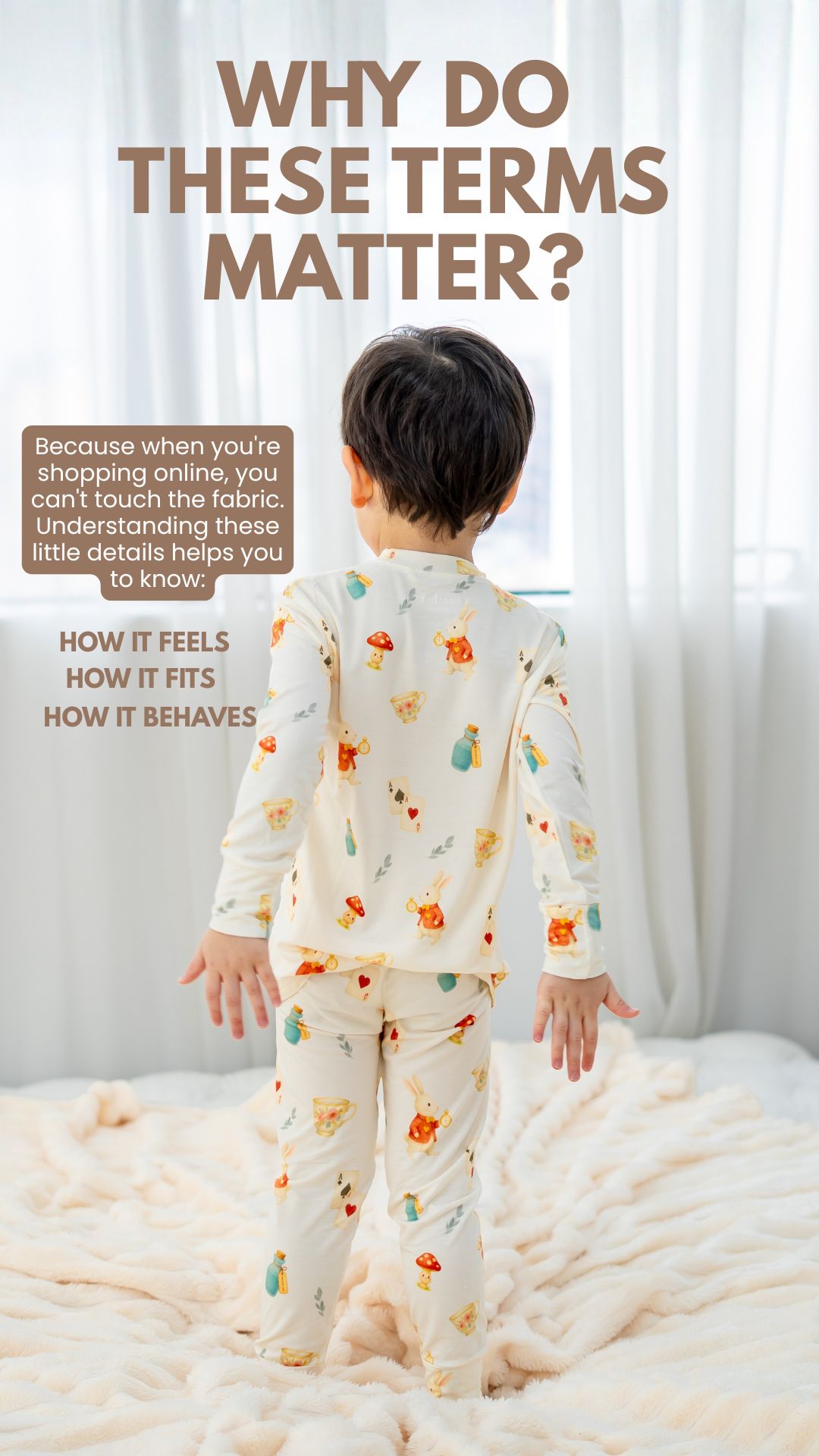
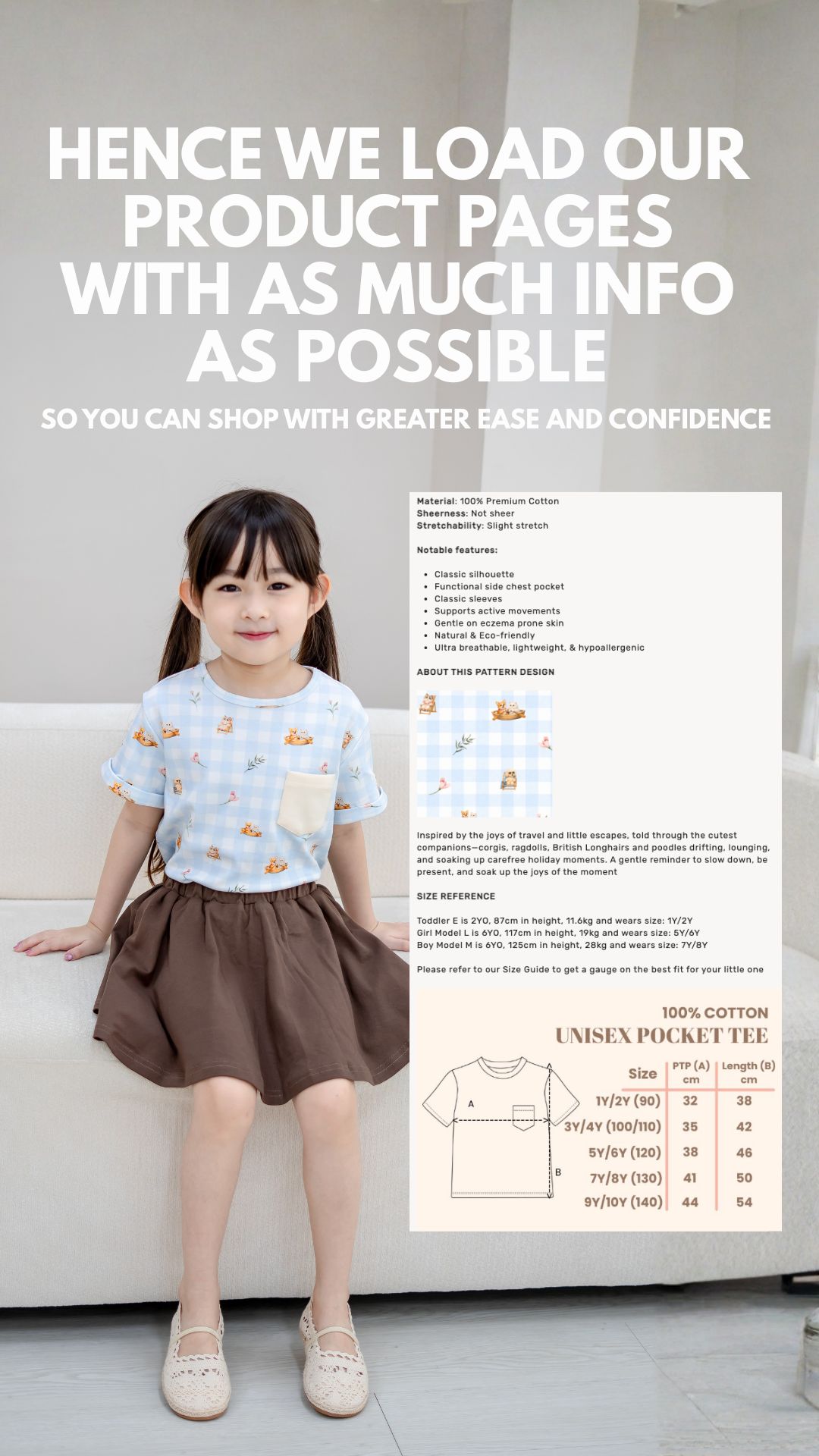
And when you're buying clothes online, you can't simply touch the fabric, hold it up to the light or let your child try it on before deciding.
So we thought we'd break down some of the most common fabric and garment terms you'll come across — and explain what they actually mean, why they matter, and what to look out for when choosing clothing for little ones.
What does GSM mean?
Let's start with one of the most commonly misunderstood terms:
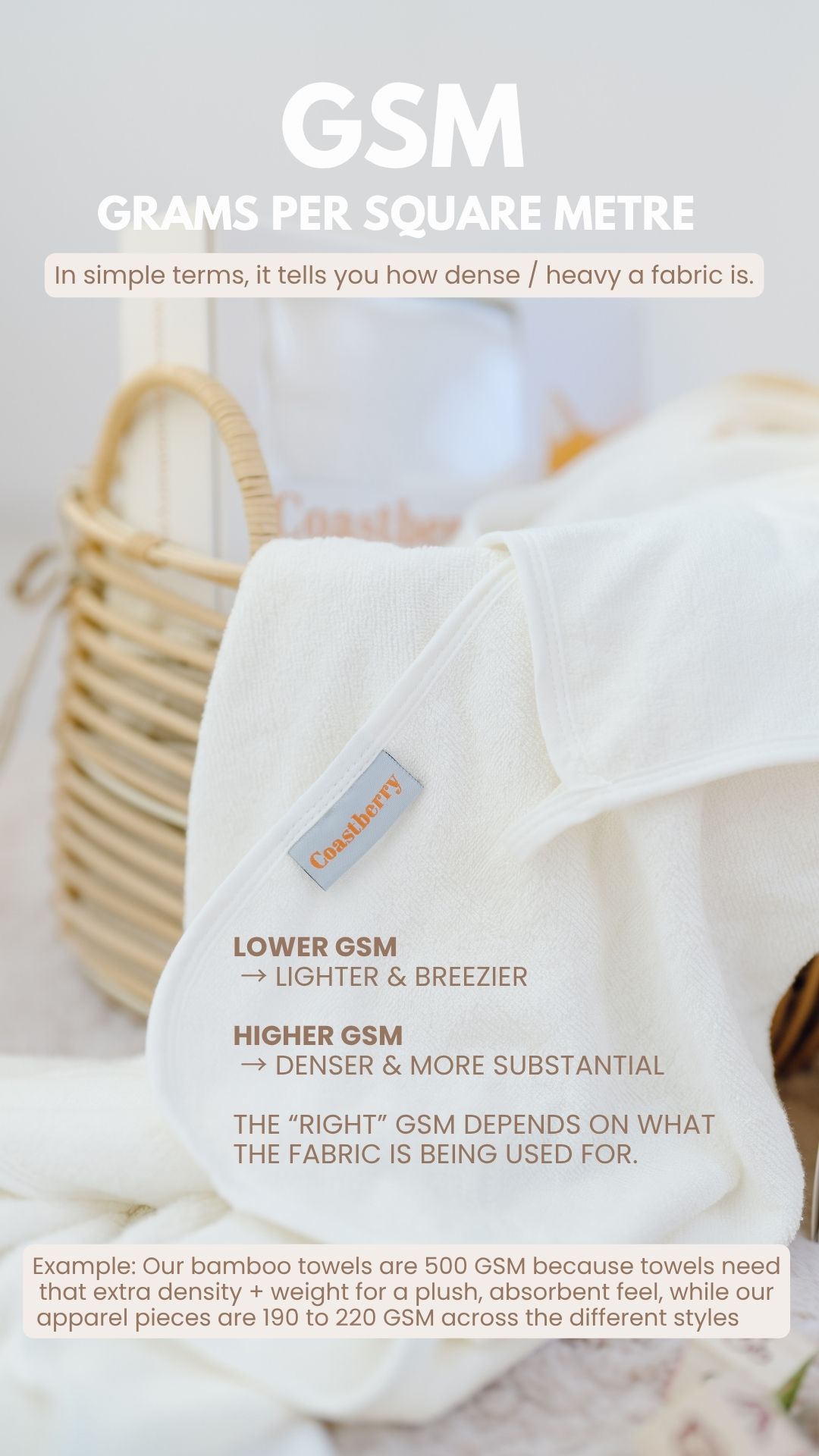
GSM = Grams per Square Metre
In simple terms, GSM refers to the weight of the fabric per square metre.
A higher GSM generally means the fabric is heavier or denser, while a lower GSM generally means the fabric is lighter.
But here's the important part:
Higher GSM does not automatically mean better quality.
And lower GSM doesn't automatically mean a fabric is poor quality either.
It depends on what the garment is intended for.
Think about it this way:
A lightweight summer top may intentionally use a lighter-weight fabric because you want it to feel airy and comfortable.
A towel, on the other hand, may have a much higher GSM because you want it to feel substantial and absorbent.
So when you're looking at GSM, don't ask:
"Is a higher number better?"
Instead ask:
"Is this weight appropriate for what I'm using it for?"
What does "stretch" mean?
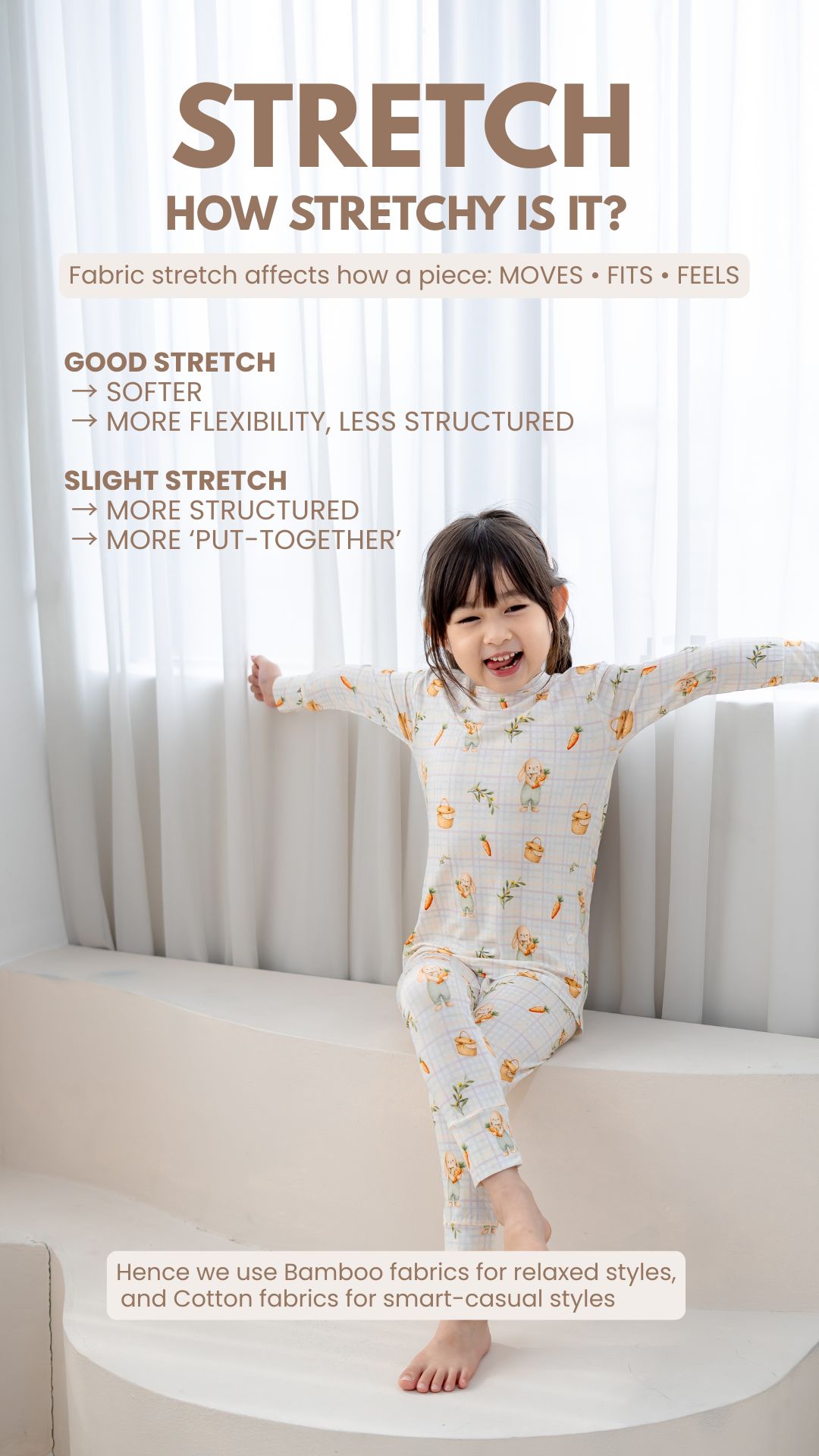
When a product description says a fabric has stretch, it refers to how much the fabric can extend when pulled or worn.
Stretch can come from the fibres themselves, the way the fabric is knitted or woven, or the addition of elastic fibres.
For children's clothing, a little stretch can be particularly useful because…children move A LOT. 😂
They run, climb, squat, sit, roll around, stretch, dance and generally refuse to stay still.
Stretch can therefore contribute to:
- Freedom of movement
- Comfort
- Easier dressing
- A more flexible fit
- Greater ease when moving or playing
But again, more stretch isn't automatically better.
Different garments need different levels of structure.
For example, a fitted garment may benefit from stretch, while a structured dress may intentionally have less stretch to maintain its shape.
When shopping online, ask:
Is the fabric stretchy?
Where does the stretch come from?
Is the garment designed to be fitted or relaxed?
And most importantly:
Does the amount of stretch suit what my child will be doing in it?
What does "sheerness" mean?
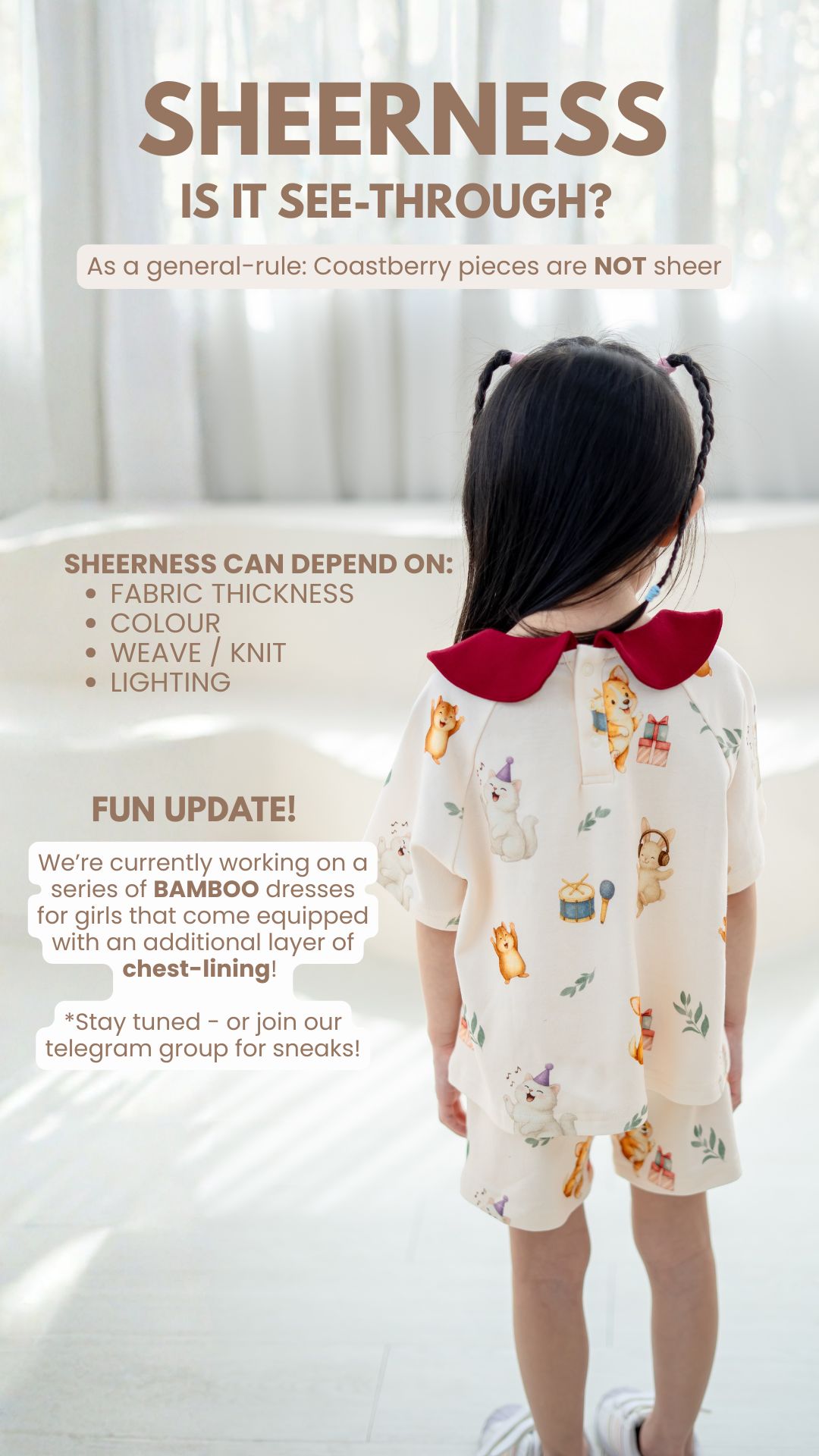
Sheerness refers to how much you can see through a fabric, particularly when it's held against light or worn.
This can be affected by several things, including:
- Fabric weight
- Fabric density
- Colour
- Weave or knit construction
- Garment design
- Whether the fabric is stretched when worn
A lightweight white or pastel fabric, for example, may appear more translucent than a darker or denser fabric.
Why does sheerness matter for children's clothing?
Because what looks perfectly opaque on a product photo may look different in natural light or when the garment is actually being worn.
This is particularly worth considering for:
- White clothing
- Light-coloured dresses
- Lightweight fabrics
- Summer clothing
- Garments that fit closely to the body
When assessing a garment online, don't just look at the colour.
Look for information about the fabric's weight, construction and whether the garment includes additional lining or coverage where appropriate.
What does "waterproof" mean?
Here's another term that's worth understanding — especially when you're shopping for bags, outerwear or other products designed to deal with water.
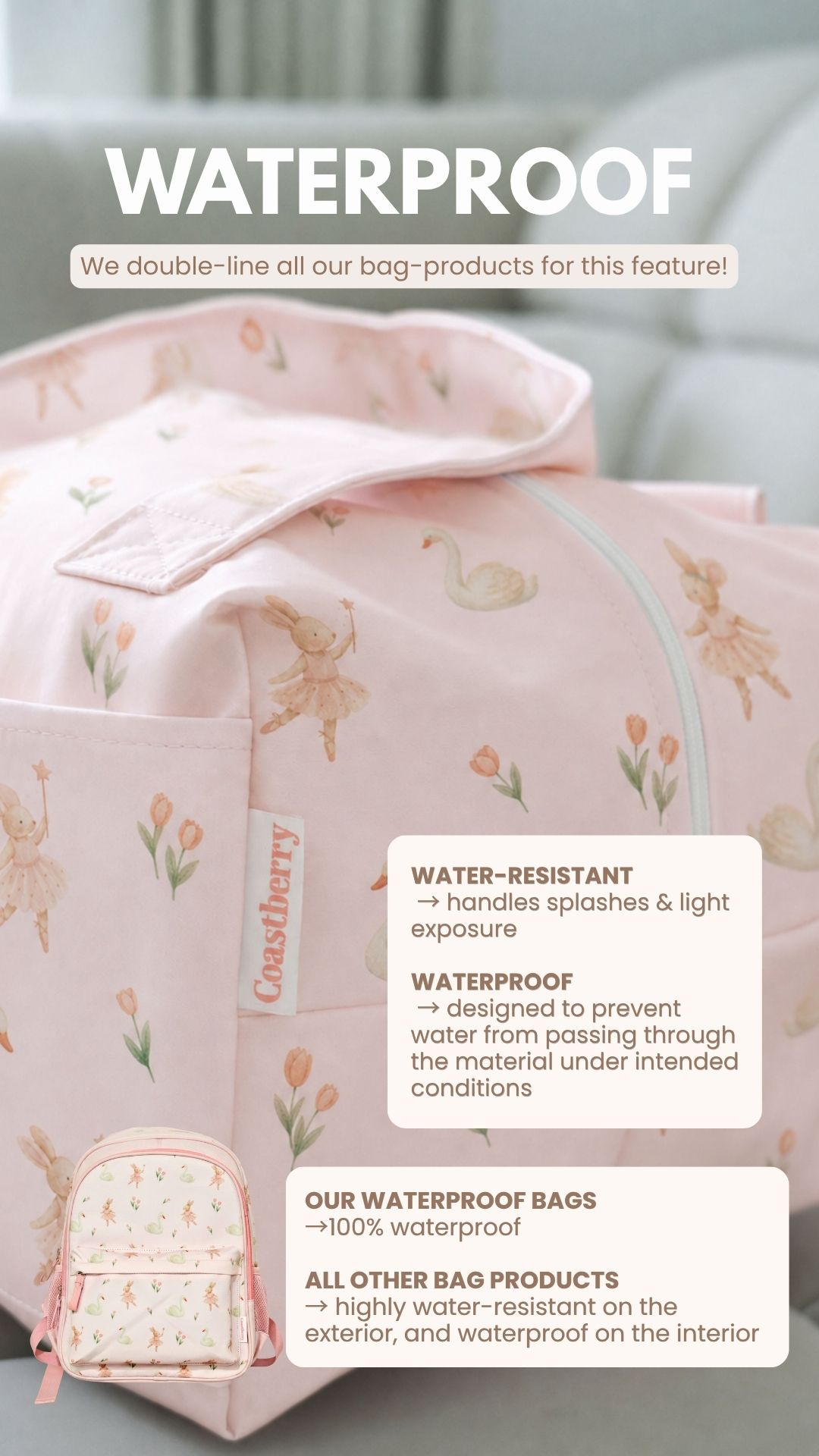
Waterproof does not simply mean "water-resistant."
While these terms are sometimes used interchangeably in everyday conversation, they can describe different levels of protection.
Water-resistant generally means a material can resist some exposure to water, but water may eventually penetrate.
Waterproof indicates a higher level of resistance to water penetration.
But the actual level of protection depends on the material, construction and how the product is made.
For example, a bag may use waterproof fabric but still have areas where water could potentially enter through:
- Zips
- Seams
- Openings
- Stitching
- Construction points
So when you're buying a product described as waterproof, it's worth looking beyond the fabric itself and considering how the entire product has been constructed.
What does "breathability" mean?
This is probably one of the terms parents care about most — especially here in Singapore.
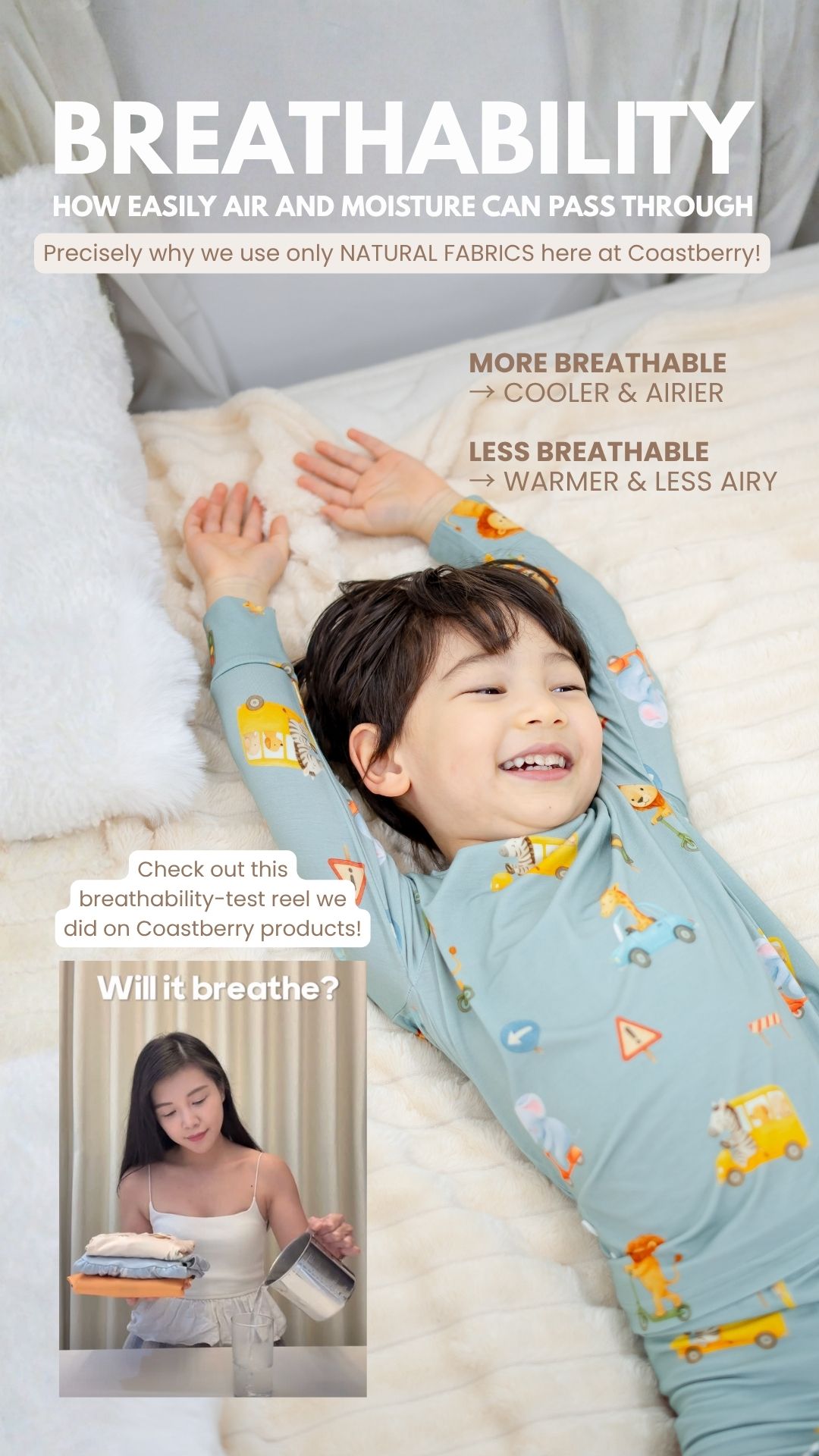
When we describe a fabric as breathable, we're generally talking about how easily air and moisture can move through the fabric, helping the wearer feel more comfortable.
Breathability can influence how a garment feels when your child is:
- Playing outdoors
- Running around
- Sleeping
- Spending time in warm weather
- Sweating or becoming active
But just like GSM, breathability isn't determined by one number or one feature.
It can depend on:
- Fibre type
- Fabric construction
- Fabric density
- Garment design
- Fit
- Layers
- Environmental conditions
Why does this matter in Singapore?
Our warm and humid climate means children can get hot and sweaty quickly.
For everyday children's clothing, many parents therefore look for fabrics and designs that feel light, comfortable and suitable for warm weather.
This is also why we pay close attention to fabric choice when developing Coastberry pieces.
We don't simply look at what a fabric is made from.
We think about how the finished garment will actually feel when a child wears it in real life.
Watch this reel where we did an experiment to showcase the breathability of Coastberry's pieces!
.jpg)
It’s Not Just About the Fabric
When we talk about children’s clothing, the material itself is only part of the picture. We also pay attention to the smaller details that can make a surprisingly big difference to everyday comfort and practicality.
That includes the components and trims used on the finished garment — from choosing durable YKK zippers for our swimwear, to looking for softer collar solutions that sit comfortably against the neck, and using easy-to-manage snap buttons where they make dressing and changing simpler for both little ones and parents. These details may not always be the first thing you notice in a product photo, but they are often the things you appreciate after wearing and using the product repeatedly.
The same thinking applies beyond clothing too. Our hooded bamboo towels, for example, are designed with a hood for a reason — it helps keep little heads warm and makes wrapping up after a bath or swim that little bit easier. We think about how a product will actually be used by a child and parent, not just how it looks when it is photographed.
Because for us, good design isn't simply about choosing a beautiful fabric. It's about considering the whole experience — the fabric, construction, components, comfort, functionality and those little details that make something easier and nicer to use.
Some days, it probably seems like we’re overthinking things. Why spend so much time thinking about a zipper, a collar, a snap button or the little details that most people may never notice?
But most days, we simply want to do better — to create things that make life a little more comfortable, practical and joyful for both little ones and their parents. Because at the heart of Coastberry, it has never just been about making clothes. It’s about listening to what parents need, paying attention to the details, and doing our little part to better serve the parenting community.