
.jpg)
Choosing the right size for your child sounds easy enough…until you're staring at a size chart wondering whether your little one is a 18M-24M, 3Y/4Y, or somehow both.
And if you've ever bought children's clothing online, you'll probably know the dilemma:
"Should I stick to their usual size?"
"Should I size up so they can grow into it?"
"Why is my child wearing a 3Y/4Y in one brand and a 5Y/6Y in another?!"
The truth is, children's clothing sizes aren't always as straightforward as they seem.
Every child grows differently, and every brand may use slightly different measurements, proportions and fits. That's why age should only be a starting point — your child's actual measurements and the way you want the garment to fit are much more useful when choosing a size.
Here's our simple guide to help you make a more confident choice.
Don't rely on age alone
You'll often see children's clothing labelled as 18M-24M, 3Y/4Y, 5Y/6Y and so on.
While these age labels are useful as a general reference, they don't mean every 5-year-old will fit a 5Y/6Y garment perfectly.
Two children of the same age can have very different:
- Heights
- Body proportions
- Chest measurements
- Waist measurements
- Leg lengths
- Growth patterns
That's why we recommend using the age label as a starting point, rather than the deciding factor.
Think of it this way:
Age tells you roughly where to start.
Measurements help you decide where to land.
Start with your child's height
One of the easiest and most useful measurements to take is your child's height.
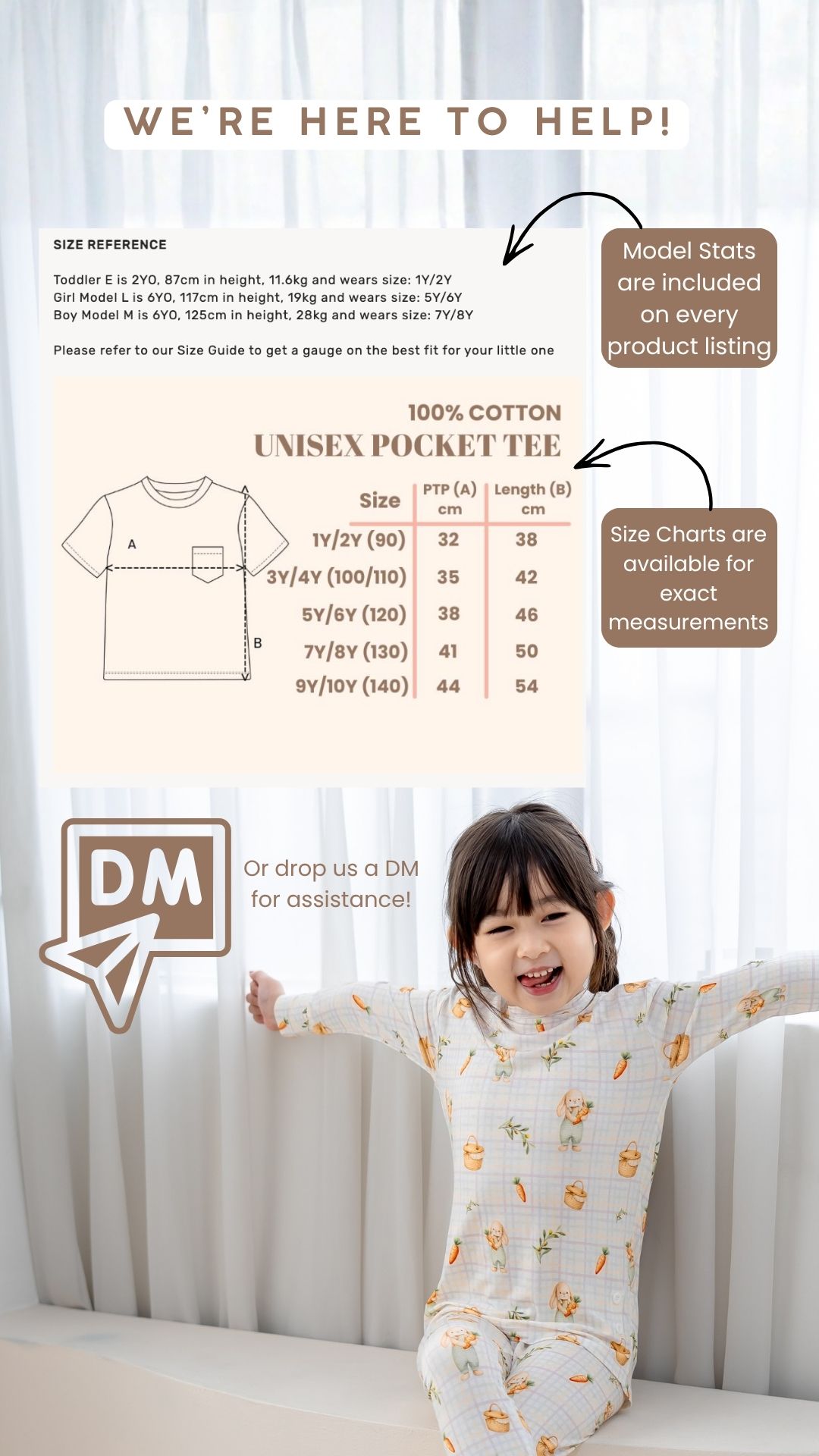
_2.jpg)
To measure accurately:
- Have your child stand barefoot on a flat surface.
- Ask them to stand upright with their back against a wall.
- Keep their heels on the floor.
- Make sure their head is facing straight ahead.
- Measure from the floor to the top of their head.
Try to use a measurement taken relatively recently, especially if your little one is going through a growth spurt.
Height can be particularly useful when choosing dresses, tops, bottoms and other pieces where overall garment length matters.
Here at Coastberry, we like to follow the +5cm and -5cm rule - meaning that the indicative height reference indicated onto our product sizes, comes with a +5cm and -5cm buffer zone for your little ones. If an item is indicated as 18M-24M (90), it would mean that it is suitable for a child whose height is within the range of 85cm to 95cm.
Check the size chart — and understand what it means
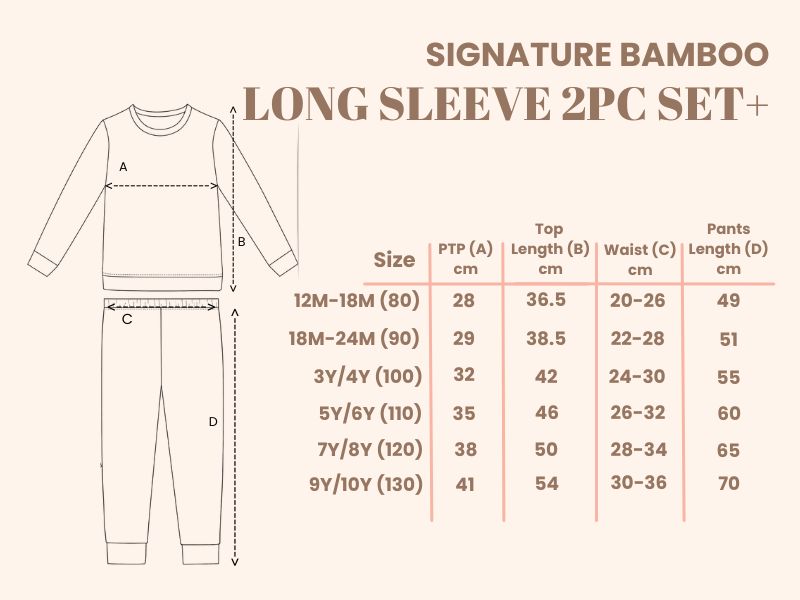
This is probably the most important step when shopping online.
Don't assume that a 5Y/6Y from one brand will fit the same as a 5Y/6Y from another.
Different brands may use different:
- Sizing standards
- Garment proportions
- Fits
- Patterns and blocks
- Grading between sizes
- Intended silhouettes for specific styles
So when shopping online, always refer to the specific brand's size chart
Think about how you want the garment to fit

The "right" size isn't always simply the biggest size your child can fit into.
Think about the intended fit of the particular garment and how you'd like it to look and feel.
Some pieces can accommodate a little extra room more easily than others.
For example:
A slightly roomier fit may work well for:
- Relaxed tops
- Loose dresses
- Some everyday casual pieces
- Styles where extra length isn't an issue
A closer fit may be more important for:
- Swimwear
- Certain sleepwear styles
- Pieces with fitted bodices
- Garments where excess length may affect practicality
Sizing up isn't automatically wrong, but bigger doesn't always mean better or longer-lasting.
A garment that's excessively oversized can affect how it sits, moves and looks — and for some pieces, it may even make the garment less practical for your child.
Consider the fabric and construction
The fabric and construction of a garment can also influence how forgiving the fit is.
For example, some fabrics such as bamboo have more natural stretch or drape, while others such as Cotton have a more structured feel.
When choosing between sizes, consider:
- Does the fabric stretch?
- Is the garment fitted or relaxed?
- Is it woven or knitted?
- Does the design allow room for movement?
- Is the garment intended to sit close to the body?
- Is extra length likely to affect how your child wears it?
This is one reason we don't recommend simply saying "always size up" or "always stick to your usual size."
The right choice can depend on the specific garment, not just the age printed on the label.
What if your child is between two sizes?
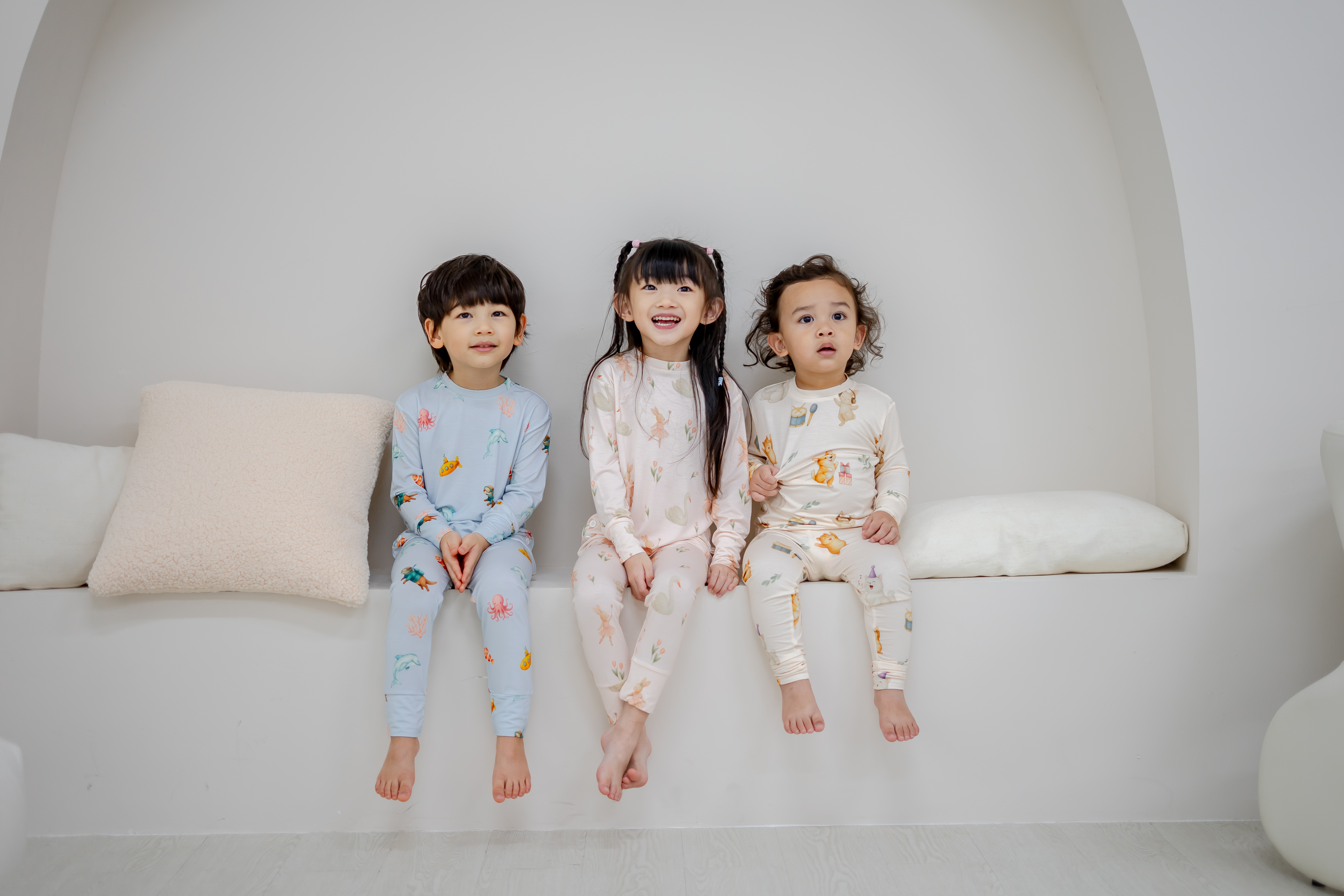
This is probably one of the most common sizing dilemmas parents face.
If your child's measurements fall between two sizes, don't panic. Start by looking at which measurement matters most for that particular garment.
For example:
You may consider the smaller size if:
- Your child is petite
- You prefer a neater or more fitted look
- The garment already has a generous fit
- The style is designed to sit closer to the body
- You're choosing swimwear where a closer fit is generally more appropriate
You may consider sizing up if:
- Your child is taller than average
- You prefer a more relaxed fit
- Extra length works well for the particular design
- Your child's measurements are closer to the upper end of the smaller size
- The garment is designed to accommodate a little more room
The important thing is to look at the whole picture, rather than relying on just one number.
What if my child's measurements don't match one size perfectly?
Don't worry.
Children aren't manufactured according to a size chart. 😂
It's completely normal for a child's measurements to fall across different sizes.
For example, your child might have the height of one size but the chest measurement of another.
When that happens, look at:
For dresses:
Consider height, chest and the desired dress length.
For tops:
Pay attention to chest width and garment length.
For bottoms:
Waist and length become particularly important.
For sleepwear:
Consider height, chest and how much room your child needs to sleep and move comfortably.
For swimwear:
A closer overall fit is generally more important than simply choosing a larger size for growing room.
When in doubt, look at the measurements of the actual garment and consider how you want it to fit.
Don't buy too far ahead just because children grow quickly
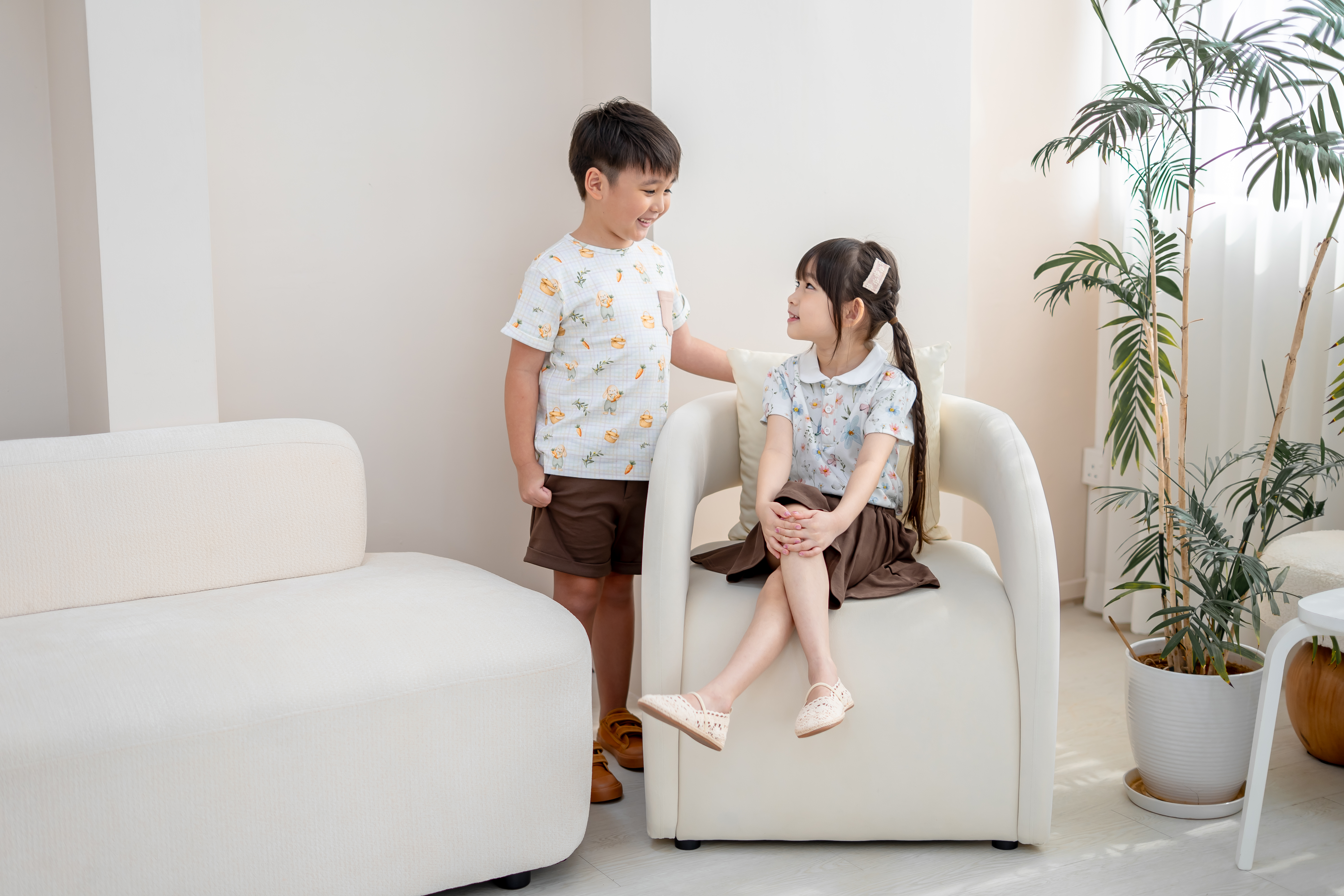
We completely understand the temptation.
"Maybe I'll just size up so they can wear it longer."
Sometimes that works beautifully. But sometimes buying too far ahead means the garment doesn't fit properly when your child actually starts wearing it.
Children grow in different ways and at different rates, so it's worth considering:
- How soon your child will wear the garment
- Whether the style works with extra length
- Whether the fabric has stretch
- Whether the garment is fitted or relaxed
- Whether you'll still be in the relevant season or occasion when it fits
For everyday clothing, choosing a little room for growth can make sense.
But the goal isn't to buy the biggest size possible.
The goal is to find a comfortable fit that your child can actually enjoy wearing.
A quick sizing checklist before you check out
Before placing your order, take a moment to check these four things:
✓ Your child's current height
Make sure you're working with a recent measurement.
✓ Their relevant body measurements
Depending on the garment, this could include chest, waist, hips or other measurements.
✓ The brand's size chart
Always check the measurements for the specific brand and style.
✓ Your preferred fit
Would you like it to be more fitted, true-to-size or relaxed?
Taking an extra minute to check these can save you from the frustrating experience of receiving an outfit and thinking:
"Hmm… I'm not sure about this size." 😅
Still unsure? We're happy to help!
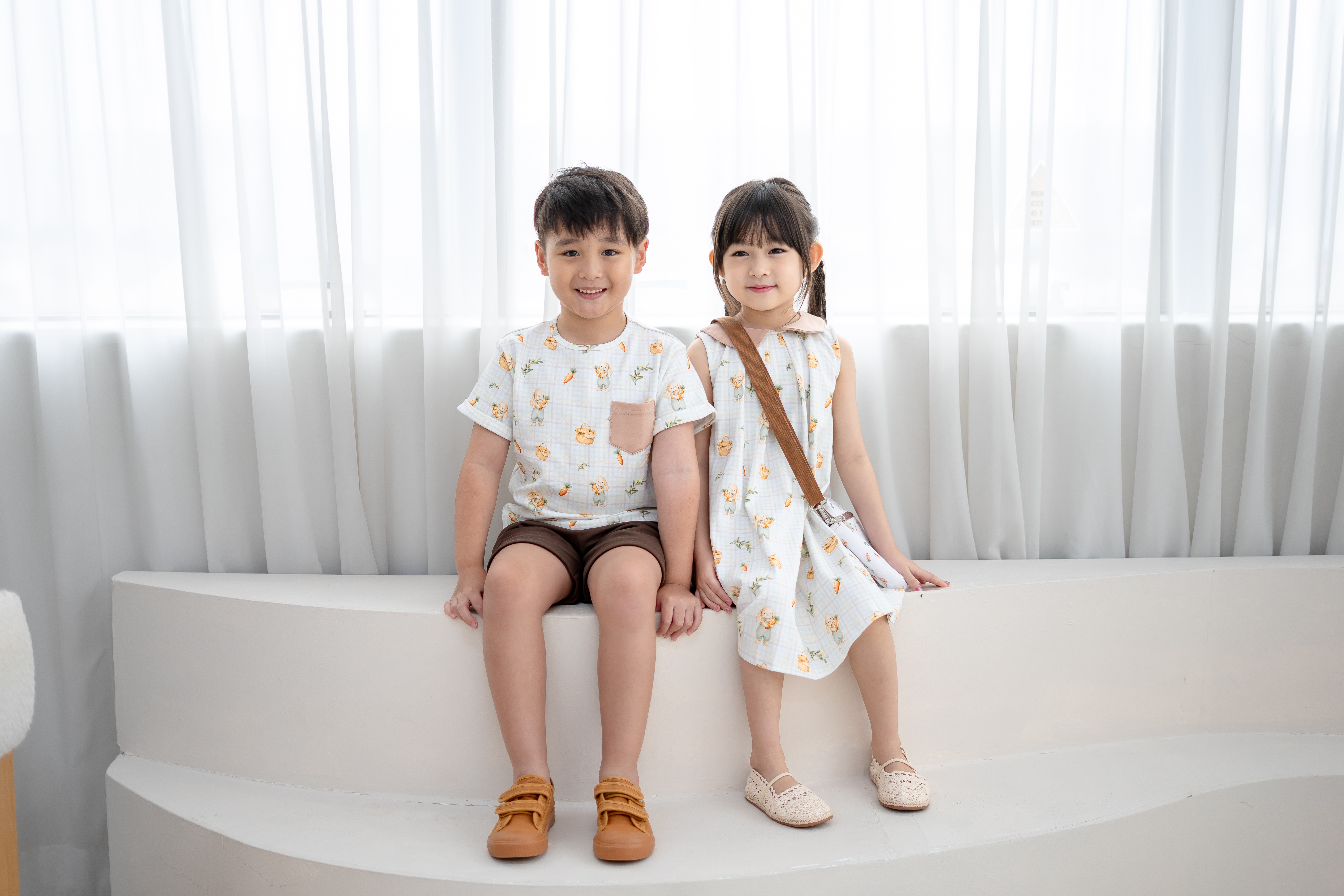
We know that buying children's clothing online can sometimes feel like a guessing game — especially when you're shopping for a growing child.
If you're caught between two sizes or simply aren't sure which one would work better, don't hesitate to reach out to us.
Share your child's:
- Height
- Weight
- Usual size
- Relevant measurements, if available
- The Coastberry piece you're considering
And we'll do our best to guide you based on the specific garment and fit, rather than simply telling you to "size up."
Because ultimately, the best size isn't necessarily the biggest one your child can squeeze into or grow into.
It's the one that gives them enough room to move, play and be comfortable — while still fitting the way the garment was designed.
Happy sizing, mamas & papas!